


Joint movement tests can help guide care, but they don’t explain pain on their own. Before booking at Portland Chiropractic Group in Oklahoma City, I’d confirm its MPI training and the listed $75.00–$99.99 new-patient exam fee.
Here’s what I’d keep in mind:
- The exam: Your health history, movement tests, and safety checks help guide treatment. Imaging may be used when needed. [1][2]
- The options: Services include adjustments, Graston Technique, dry needling, shockwave therapy, and functional training. I’d ask why a treatment fits my symptoms and goals. [1][2]
- Before booking: I’d check insurance, scheduling, follow up costs, and which MPI courses or certifications the clinician has completed. [1]
My takeaway: focus on how the exam shapes your care, not just the method’s name.
What Motion Palpation Institute® Based Care Means
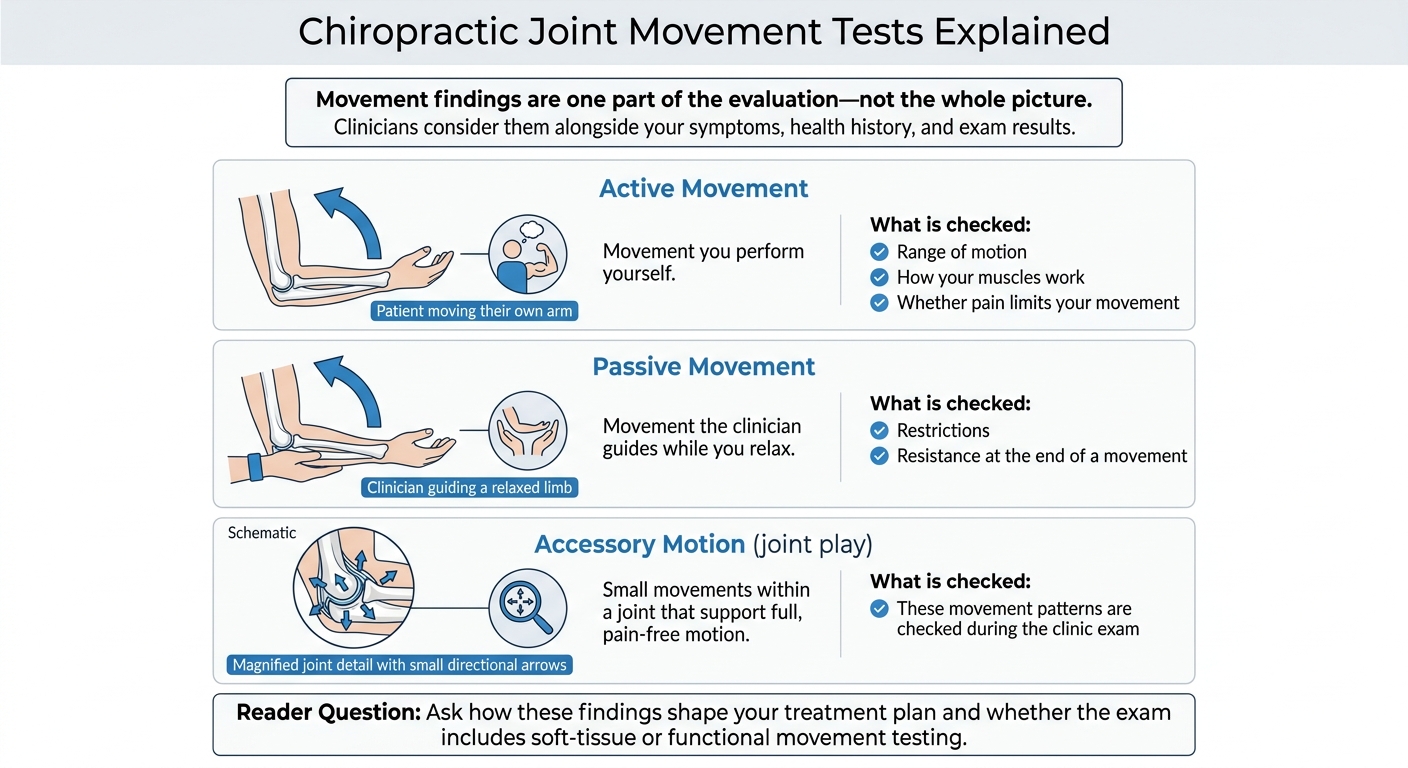
Chiropractic Joint Movement Tests Explained
Motion Palpation Institute® based care focuses on how joints move and function. At Portland Chiropractic Group in Oklahoma City, clinicians use movement findings to tailor adjustments, with the goal of improving mobility and reducing discomfort. [1]
Active, Passive, and Accessory Joint Movement
Active movement is movement you perform yourself. It lets the clinician check your range of motion, how your muscles work, and whether pain limits your movement.
Passive movement is movement the clinician guides while you relax. It helps them check for restrictions and feel the resistance at the end of a movement.
Accessory motion, or joint play, refers to the small movements within a joint that support full, pain free motion. These movement patterns are checked during the clinic exam.
How Movement Findings Guide Care
Movement findings are one part of the evaluation, not the whole picture. Clinicians consider them alongside your symptoms, health history, and exam results. Ask how these findings shape your treatment plan and whether the exam includes soft tissue or functional movement testing [1].
The next section explains how Portland Chiropractic Group checks these movement patterns during the exam.
sbb-itb-ed556b0
How Joint Movement Is Assessed
During a typical visit, the clinician checks joint movement based on your symptoms, health history, daily activities, and mobility goals. The exam focuses on the joints and movements most closely linked to your pain, stiffness, or limited mobility.
Health History and Movement Tests
Your health history helps guide which joints and movements the clinician tests first. They may also ask you to perform everyday movement tasks to check your balance and agility [1].
Examination Findings and Safety Checks
The clinician may check your range of motion, differences between sides, pain, and stiffness. If you have spine related leg pain, they may assess whether your symptoms suggest nerve irritation or pain felt away from its source, known as referred pain [1]. Imaging, including X-rays, may help with the clinical evaluation and safety checks [2].
What to Expect at Portland Chiropractic Group
After the movement exam, the focus turns to your treatment plan. Portland Chiropractic Group offers paperless intake forms through an emailed link or its in office, HIPAA compliant system. The listed new patient exam fee is $75.00–$99.99. Confirm the exact charge when you schedule. [1]
Your Consultation and Treatment Discussion
During the consultation, you’ll review how your symptom history relates to the movement findings. Your care goals also help guide the discussion before you talk about treatment. [1]
Your Care Plan and Follow Up
Confirmed services include chiropractic adjustments (HVLA), Graston Technique, dry needling, shockwave therapy, and functional training. [1][2] If a service is recommended, ask how it fits your exam findings, goals, and budget. Also discuss the follow up timeline and what care you may need at those visits.
Assessment Limits and Appointment Decisions
Active, passive, and accessory motion findings show how a joint moves. Here’s what those findings can and cannot tell you.
What Movement Assessment Can and Cannot Show
Stiffness after sitting, discomfort during movement, and reduced mobility can help guide an evaluation. But movement findings show how you move, not why symptoms occur. Clinicians consider them alongside your health history and safety checks.
These findings can reveal painful or guarded motion and help narrow down where symptoms occur. On their own, they cannot establish the exact tissue source; that requires the rest of the exam. [1]
Details to Confirm Before Booking
Ask which MPI specific courses or certifications the clinician has completed and whether your evaluation will use MPI based methods. Check the clinic’s official page for current hours, fees in U.S. dollars, insurance coverage, walk in availability, and online scheduling. [1]
Conclusion: Movement Findings Are One Part of Care
Before booking, contact Portland Chiropractic Group to ask how it uses movement findings and MPI based methods, and whether its evaluation matches your concerns. Movement findings help guide care, while your health history and safety checks help determine whether that care fits your condition. [1]
FAQs
Can I be evaluated without getting an adjustment?
Yes, you can get an evaluation without an adjustment. Portland Chiropractic Group starts with a consultation and a thorough exam to assess your condition, movement patterns, and health history.
Your treatment plan depends on your goals and the evaluation findings. Beyond adjustments, the clinic offers evidence-based services, including the Graston technique, dry needling, and functional training.
How will I know if my mobility is improving?
Watch for smoother, more natural movement that takes less effort during daily activities and exercise. You may also notice a better range of motion, less muscle tension, and better coordination.
Track your pain levels and triggers in a log to see how your body responds to treatment over time. Your chiropractor will also reassess your needs and check for improvements in movement.
Which symptoms would require a medical referral?
Seek a medical referral or urgent evaluation if you lose bowel or bladder control, have neck pain after an accident, or feel sudden “shock like” sensations when bending your chin. If neck or back pain comes with other neurological warning signs, get prompt medical guidance before starting treatment. [1]

Comments are closed