

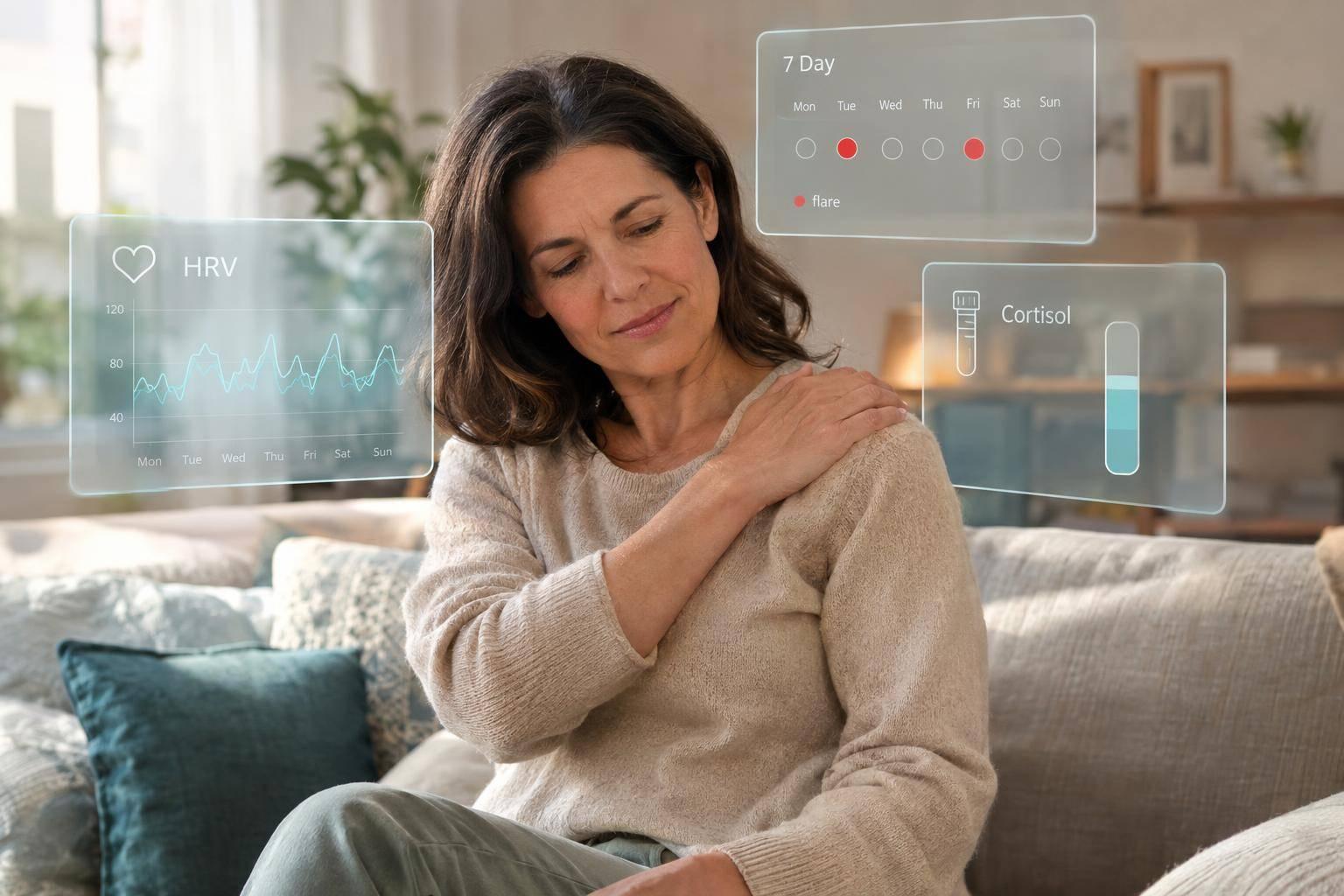
Stress can worsen chronic pain, but no single test explains why. My practical takeaway: track your flares, sleep, activity, and medication use, then discuss the pattern with your clinician. New or worsening symptoms still need evaluation.
Here’s how I’d sum up the science:
- Stress hormones: Cortisol levels can be higher or lower, depending on the person and pain condition.
- Recovery: Heart rate variability offers clues about how the body settles after stress – not a diagnosis.
- Pain sensitivity: Brief stress may reduce pain, while repeated stress may increase sensitivity and prolong flares.
- Research gaps: Studies need consistent measurements and testing over time before these markers can guide care.
For now, I’d focus on symptoms, daily function, and recovery rather than a test result alone.
Stress & Chronic Pain with Dr. Timothy Kelly
sbb-itb-ed556b0
Stress Hormones and the Autonomic Nervous System
Chronic pain can repeatedly trigger the body’s stress systems, changing hormone release, autonomic control, and immune signaling. Changes in stress signaling can prolong pain flares, which is why these markers matter.
Cortisol and Short-Term Stress Responses
The hypothalamic–pituitary–adrenal (HPA) axis regulates cortisol. The sympathetic–adrenomedullary (SAM) system manages stress chemicals such as adrenaline. Together, these pathways handle short-term stress.
Repeated activation can disrupt that regulation. But cortisol patterns vary by pain condition and person: studies report both higher and lower levels. A cortisol result needs context – it shouldn’t be interpreted on its own.
Autonomic Responses and Recovery
The sympathetic nervous system helps the body gear up for action, while the parasympathetic system supports recovery. High-frequency heart rate variability (HRV) serves as a marker of parasympathetic recovery after stress.
What Stress Measurements Can Tell Us
Cortisol and HRV provide different, complementary clues. Neither measure alone defines stress intolerance; both need to be interpreted within the larger clinical picture.
| Measure | What it reflects | Key limitation |
|---|---|---|
| Cortisol | HPA-axis hormone signaling | Results vary by person and pain condition |
| High-frequency HRV | Parasympathetic regulation | Findings vary by condition and recording settings |
The next section looks at how stress signaling can intensify pain by increasing pain sensitivity.
How Stress Can Increase Pain
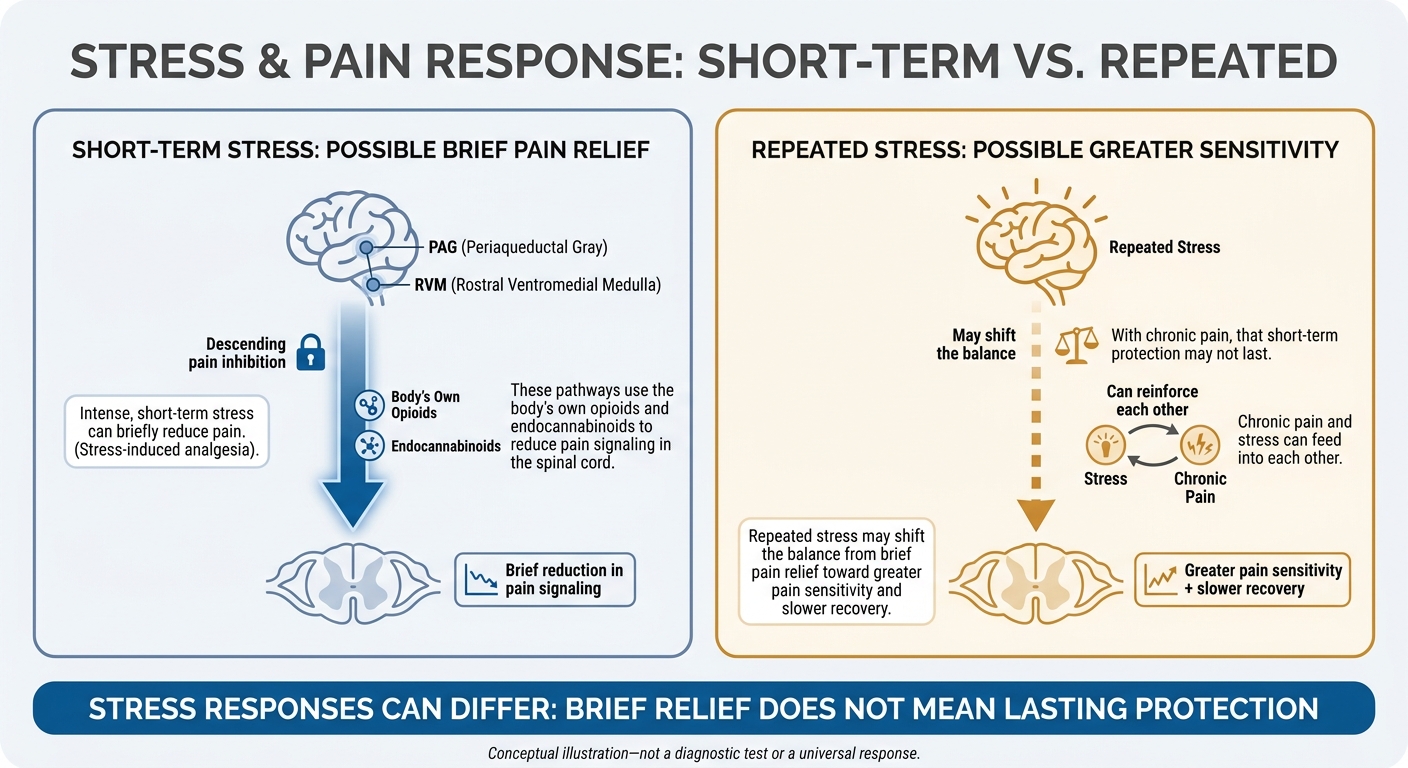
Stress and Chronic Pain: Short-Term Relief vs. Repeated Stress
Intense, short-term stress can briefly reduce pain, a response called stress-induced analgesia. This protective response activates descending inhibitory pain pathways – especially the periaqueductal gray (PAG) and rostral ventromedial medulla (RVM). These pathways use the body’s own opioids and endocannabinoids to reduce pain signaling in the spinal cord.
With chronic pain, that short-term protection may not last, making stress harder to tolerate over time. Repeated stress may shift the balance from brief pain relief toward greater pain sensitivity and slower recovery. This helps explain how chronic pain and stress can feed into each other.
Research Limits and Next Steps
What We Know and What Remains Unclear
The main limitation isn’t one missing marker. It’s inconsistent evidence across studies. Researchers haven’t identified a consistent biological profile of stress intolerance, and cortisol and HRV findings vary too much to guide care.
Why Study Results Differ
Studies differ in the pain conditions they examine, how they collect samples, and their recording settings. These differences make it hard to tell whether cortisol and HRV patterns consistently explain stress-related flares. They also make findings difficult to compare across chronic pain studies.
Research Toward More Individualized Care
Biomarkers such as cortisol and HRV still show promise. But before they can guide chronic pain care, researchers need consistent definitions, standardized measurement, and prospective validation – testing whether the findings hold up over time. Future studies also need standardized outcome measures.
The next question is how these limits should shape pain assessment in everyday care.
Conclusion: What This Means for Pain Care
No single biomarker defines stress intolerance, so assessment depends on the clinical picture. Cortisol testing and experimental stress tests aren’t standard tools for diagnosing it. Stress-related pain flares need to be considered alongside pain history, daily function, and recovery – not treated as proof of one biological cause.
Discussing Stress-Related Pain Flares
Keep a log of flare timing, sleep, activity, stressors, and medication use. Bring it to your appointment for discussion, not self-diagnosis. This record can help your clinician separate stress-related flares from other causes.
A clinical evaluation should cover exam findings, daily function, injury history, and emotional health. Describe when your pain began, where it occurs, how it feels, and what triggers it. The exam may include range-of-motion checks, orthopedic and neurological testing, and a hands-on exam. [1]
An assessment tailored to you, along with coordinated care, helps match treatment to your symptoms, function, goals, and recovery over time. Review your functional goals, why each treatment is being used, and when your care team will reassess progress.
FAQs
How can I tell if stress is worsening my pain?
Watch for increased muscle tension, tight knots or trigger points, frequent headaches, or pain that interferes with sleep, work, or daily activities [1][2][3]. Track these symptoms along with your stress levels and pain intensity. This can help you spot a connection: stress can affect your nervous system and make musculoskeletal discomfort worse [1][3].
If you notice these symptoms, a healthcare provider can work with you on a personalized plan to manage stress and pain [4][5].
Does stress-related pain mean my pain is psychological?
No. Stress-related pain is a real physical response involving your nervous system and muscles [1][2]. Stress can tense your muscles and change how your nervous system regulates stress and processes pain. These changes can contribute to headaches and lasting discomfort [1][3][4].
These physical effects deserve care – not dismissal as “purely mental.” Care may include stress management, movement, or clinical interventions [4][2].
Can better stress recovery reduce my pain flares?
Yes, getting better at recovering from stress can help reduce pain flares. Chronic stress can tighten muscles and change how the nervous system regulates itself, making pain signals feel stronger.
Relaxation exercises, short breaks, and targeted physical therapies can help calm the nervous system and ease stress-related muscle tightness. Working on these factors alongside your usual care is an important part of managing chronic pain.
Related Blog Posts
- Top Integrative Therapies for Chronic Pain
- Tendinopathy: The Interplay between Mechanical Stress, Inflammation, and Vascularity
- Neuroimmune interactions in musculoskeletal conditions. An introduction for clinicians and patients
- Predictors of response to spinal manipulative therapy, dry needling and exercise in patients with cervicogenic headache

Comments are closed