

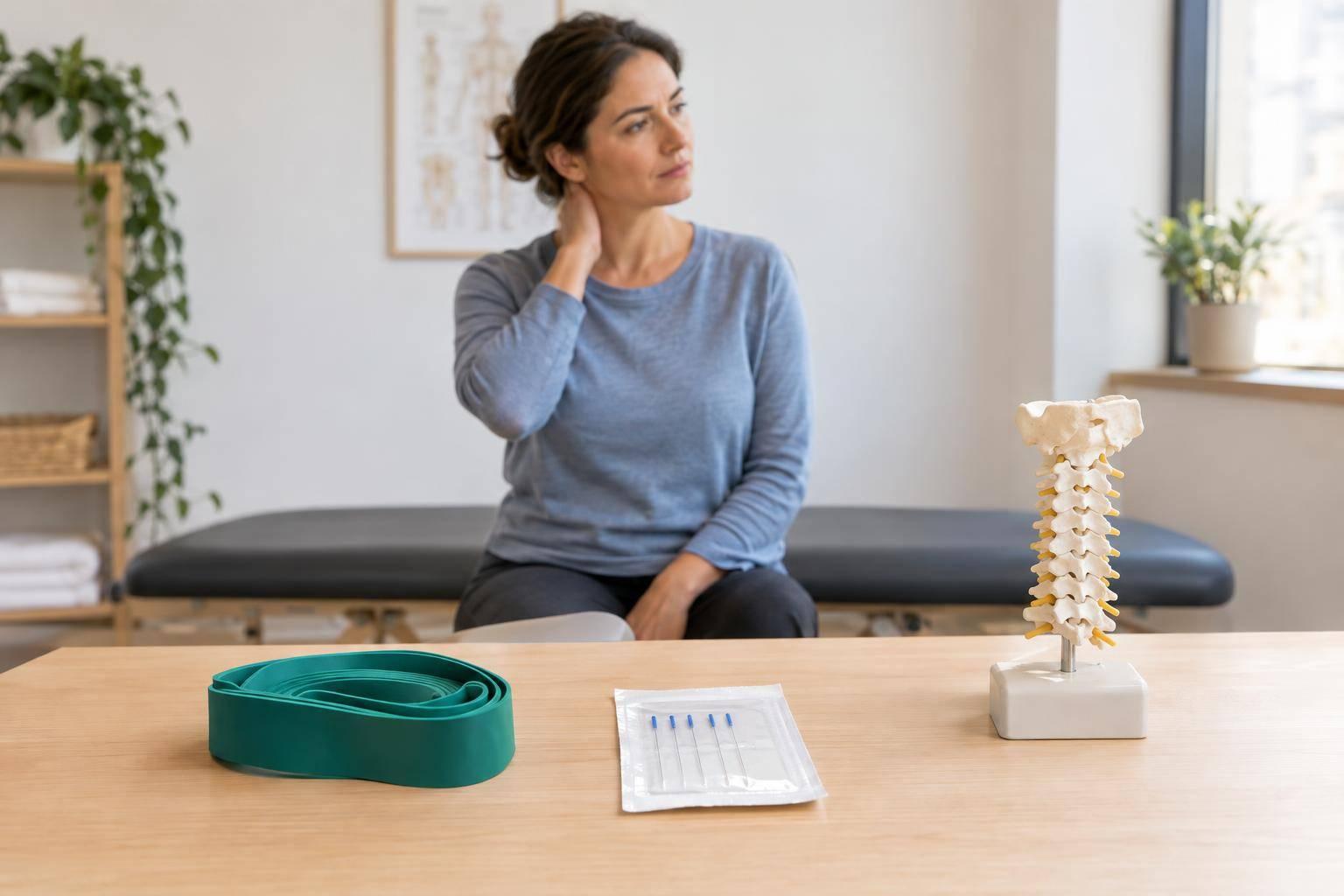
We can’t yet reliably predict who will respond to spinal manipulation, dry needling, or exercise for cervicogenic headache. My takeaway: choose care with your clinician based on your diagnosis, goals, and preferences – not a single neck finding.
Here’s what I’d keep in mind:
- Diagnosis isn’t prediction. A cervical source helps explain the headache, but it doesn’t tell us which treatment will work.
- The three treatments need separate assessment. Findings for manipulation or exercise don’t automatically apply to dry needling. Dry needling may reduce pain and neck disability, but results for headache frequency are mixed.
- Track three headache measures: frequency, intensity, and duration. Add a disability measure and check both early and later results.
- Patient traits aren’t proven treatment-selection rules. Trigger points, neck motion, expectations, and headache history have not been validated for that purpose.
I’d focus on measured progress and safety: agree on a review date, report side effects, and revisit the plan if symptoms change or improvement is limited. Average improvement in a study doesn’t guarantee your response.
How Studies Measure Treatment Response
Headache Frequency, Intensity, and Disability
Studies track headache frequency, duration, and intensity to measure response to spinal manipulation, dry needling, and exercise. [2]
Patient-reported disability and daily function help show whether improvement makes a difference in daily life – not just whether it is statistically significant. [2]
Before comparing studies, define the response threshold: the minimum improvement a participant needs to count as a responder. Studies often report the percentage of participants who meet that threshold. [2]
Short-Term and Lasting Results
Keep immediate post-treatment effects separate from follow-up results measured days or weeks later. The timing matters because findings about which patient traits predict improvement depend on when treatment response is measured. [2]
Once response is defined, the next step is to examine which patient findings predict improvement.
sbb-itb-ed556b0
Predictors of Response to Spinal Manipulation and Exercise
Patient Traits and Headache Patterns
Response is measured by headache frequency, intensity, and disability. The question is whether traits present before treatment can help predict who improves. No validated predictors have been established in adults with cervicogenic headache who receive spinal manipulation or exercise.
Expectations and Treatment Factors
Findings for spinal manipulation, exercise, manual therapy, and combined programs should not be applied interchangeably. Evidence for one approach does not establish predictors for another.
Table of Candidate Predictors
| Candidate predictors | Evidence status |
|---|---|
| Adult demographics, headache history, or neck findings | No validated predictor reported |
| Expectations, adherence, or treatment frequency | No validated predictor reported |
Dry needling is reviewed separately because its evidence on predictors may differ from that for spinal manipulation and exercise.
Dry Needling: Treatment Results and Response Predictors
Findings From Trials and Reviews
Dry needling has its own evidence base, separate from research on manipulation and exercise. Data on response predictors are more limited. Studies suggest dry needling may reduce headache intensity and neck disability, but results for headache frequency are mixed.
Which Patient Findings Predict Response?
Many studies select patients based on active cervical trigger points. But the available studies do not show that trigger point patterns, baseline headache burden, cervical motion, disability, or muscle dysfunction predict treatment response.
For now, baseline assessment and response at follow-up remain the main guides for tailoring dry needling to each patient.
Conclusion: Applying the Findings to Individual Care
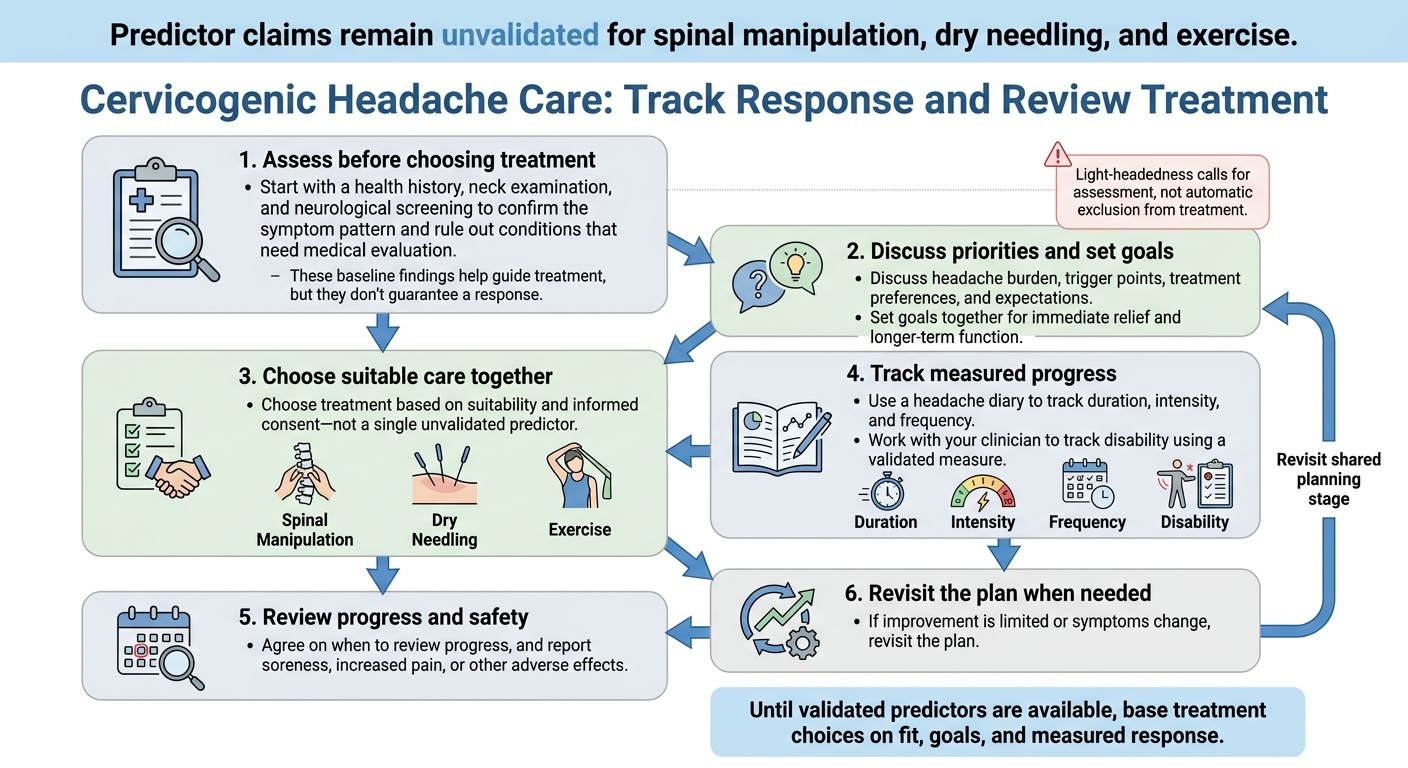
Cervicogenic Headache Care: Track Response and Review Treatment
Assessment Before Choosing Treatment
Start with a health history, neck examination, and neurological screening to confirm the symptom pattern and rule out conditions that need medical evaluation. These baseline findings help guide treatment, but they don’t guarantee a response. Light-headedness calls for assessment, not automatic exclusion from treatment. [2]
Once the diagnosis is supported, discuss headache burden, trigger points, treatment preferences, and expectations. Set goals together for immediate relief and longer-term function. Choose treatment based on suitability and informed consent – not a single unvalidated predictor. [2]
Track Progress and Review the Plan
Once treatment starts, use a headache diary to track duration, intensity, and frequency. Work with your clinician to track disability using a validated measure. Agree on when to review progress, and report soreness, increased pain, or other adverse effects. If improvement is limited or symptoms change, revisit the plan. [2]
Key Findings and Research Gaps
Evidence for treatment effects is clearer than evidence for choosing a treatment for an individual. Predictor claims remain unvalidated for spinal manipulation, dry needling, and exercise. It’s also unclear whether those claims apply across treatment combinations, doses, techniques, diagnoses, and follow-up periods. [2]
Future research should specify predictors in advance, test models in independent patient groups, and report absolute responder rates alongside average changes. Until validated predictors are available, base treatment choices on fit, goals, and measured response. [2]
FAQs
How much improvement counts as a treatment response?
Thresholds differ across studies. Treatment response is usually measured with validated self-report questionnaires that track pain intensity, headache frequency, and disability [1]. Studies report pain score reductions of 1.52 to 3.23 points and disability score improvements of 18.1 points [1][2].
Clinicians use these results alongside physical assessments to adjust care as each patient’s symptoms change [1][2].
How long should I try treatment before reassessing?
There’s no single timeline for reassessment [1]. Guidelines suggest that subacute conditions often improve within two to three sessions, while chronic pain or trigger points may need five to six sessions [2].
The best treatment frequency and duration are still unclear. Work with your provider to set clear goals, review progress regularly, and create a follow-up schedule that fits your needs. Your provider can adjust the plan based on how you respond [1][3][4].
Which symptoms during treatment need urgent medical care?
Seek urgent care if your symptoms suggest an acute medical emergency [2]. During a procedure, tell your practitioner right away if anything feels too painful or out of the ordinary [3].
Mild soreness, bruising, or temporary fatigue are common and usually go away on their own. Contact your healthcare provider if you notice unusual symptoms or have concerns after treatment [1][2][3].
Related Blog Posts
- What is the Difference Between Neurological Dry Needling, Trigger Point Dry Needling, and Electrical Muscle Stimulation Dry Needling?
- Effectiveness of Articular and Neural Mobilization for Managing Cervical Radicular Pain: A Systematic Review With Network Meta-Analysis
- Association between cervical MRI findings and patient-reported severity of headache in patients with persistent neck pain: a cross-sectional study
- Cost-effectiveness of spinal manipulation, exercise, and self-management for spinal pain

Comments are closed