

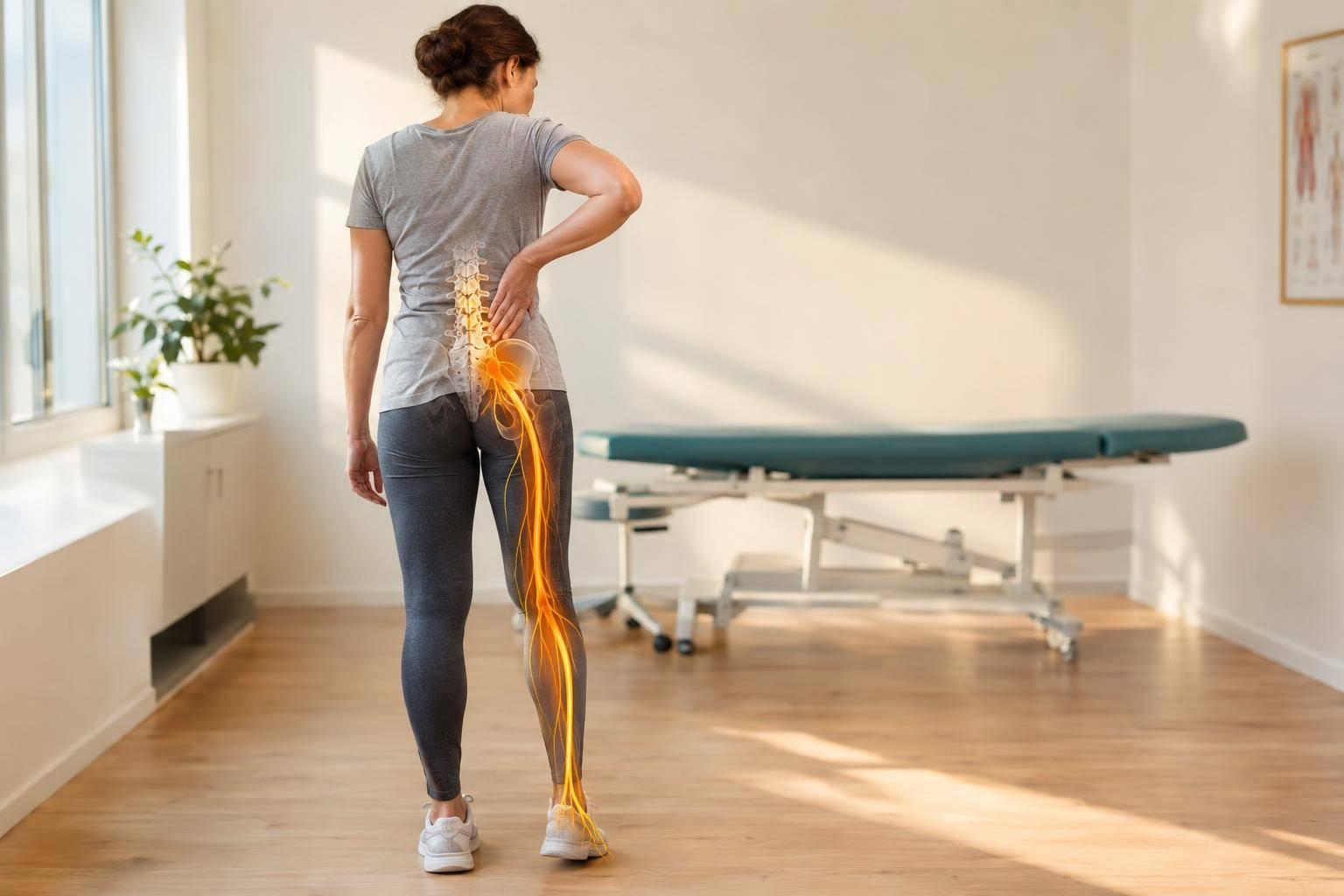
Leg pain can come from your spine – even if your back doesn’t hurt. My starting point is simple: treatment should match the cause, nerve function, and how well you can move – not pain alone.
Here’s the short version:
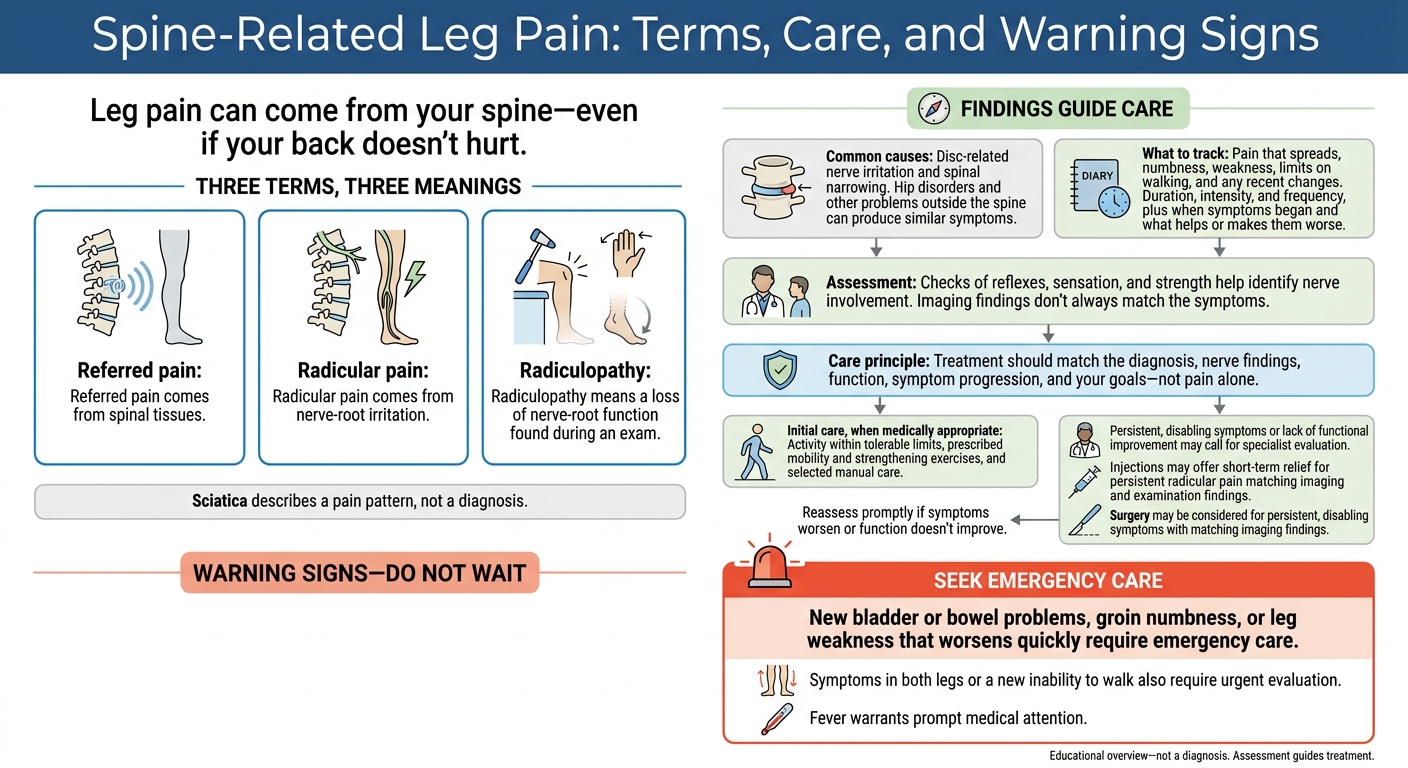
- Three terms, three meanings: Referred pain comes from spinal tissues; radicular pain comes from nerve-root irritation; radiculopathy means a loss of nerve-root function found during an exam. Sciatica describes a pain pattern, not a diagnosis.
- The cause guides care: Disc problems and narrowed nerve passages are common causes, but hip problems and other conditions can feel similar. An exam helps sort them out; imaging is used when it could change care.
- Treatment starts with the findings: Activity, exercise, and selected manual care may help. Persistent, disabling symptoms may call for specialist care, injections, or surgery.
- Some symptoms cannot wait: New bladder or bowel problems, groin numbness, or quickly worsening leg weakness require emergency care.
I’d bring notes about when symptoms started, what changes them, and any weakness or walking limits to the appointment. Those details help guide the next step.
Spine-Related Leg Pain: Terms, Care, and Warning Signs
Common causes of spine-related leg pain
Disc-related nerve irritation and spinal narrowing are the most common causes of spine-related leg pain. Other spinal conditions, and problems outside the spine, can cause similar symptoms.
Lumbar disc herniation and nerve irritation
A lumbar disc herniation can inflame or press on a nerve root, causing leg pain, numbness, or weakness. Spinal joints or discs can also cause pain felt in the leg, even without direct nerve injury.
Spinal stenosis and degenerative changes
Spinal stenosis narrows the spaces where nerves pass through. Age related wear can narrow these nerve passages and limit how far you can walk. Leg pain often gets worse with standing or walking, but imaging findings don’t always match the symptoms.
Other spinal causes and similar conditions
Less common spinal causes include fracture, tumor, and infection. Hip disorders and other problems outside the spine can produce similar symptoms.
The pattern of pain, numbness, weakness, or walking limits helps guide the next step in assessment.
sbb-itb-ed556b0
Symptoms, assessment, and warning signs
Pain patterns, weakness, and walking difficulty
Track pain that spreads, numbness, weakness, limits on walking, and any recent changes. Note when symptoms began, their duration, intensity, and frequency, what the pain feels like, and what helps or makes it worse. These details help distinguish irritation from nerve-root involvement or another cause.[2]
Clinical examination, imaging, and referral
When symptoms suggest a spinal problem but the cause remains unclear, an exam helps determine whether you need imaging or a referral. Orthopedic and neurologic tests, including checks of reflexes, sensation, and strength, which help identify nerve involvement or causes outside the spine. Screening for warning signs helps determine whether an urgent referral is needed. At Portland Chiropractic Group, this may also mean a referral for blood work or imaging when needed.[2]
X-rays assess bones and alignment. MRI is used when a serious disease is suspected, symptoms persist, or the results could change care. If the diagnosis remains unclear, further tests or a referral for more evaluation may be needed.[2]
When to seek emergency or prompt medical care
Seek urgent medical evaluation for new bladder or bowel problems, numbness around the groin or inner thighs, or worsening leg weakness. Symptoms in both legs or a new inability to walk also require urgent evaluation. Fever warrants prompt medical attention. These warning signs immediately change how the problem is assessed.
Treatment options and when to escalate care
After the exam and any needed imaging, treatment should match the diagnosis, nerve findings, function, symptom progression, and your goals – not pain alone. Once red flags are ruled out, the plan depends on whether symptoms come from irritation, nerve-root involvement, or compression.
Coordinate treatment and referrals with the clinicians involved in your care. Reassess promptly if symptoms worsen or function doesn’t improve. Emergencies need immediate evaluation.
Activity, exercise, and symptom relief
When medically appropriate, stay active within limits you can tolerate instead of spending long periods in bed. Follow prescribed mobility and strengthening exercises. Walking breaks and changes to how you lift can help reduce strain. If symptoms persist, the next step is a focused exam and targeted treatment.
Chiropractic and manual care at Portland Chiropractic Group
Care at Portland Chiropractic Group aims to reduce pain, restore motion, and improve function. It starts with your health history, posture and motion testing, orthopedic and neurological exams, and palpation.
Treatment may include manipulation or mobilization, soft-tissue care, exercise instruction, and heat, ice, ultrasound, or electrotherapy. Your plan should cover the expected benefits and risks. Mild soreness or a brief pain flare can occur.
When injections or surgery may be considered
If conservative care doesn’t restore function, epidural or selective nerve-root injections may offer short-term relief for persistent radicular pain that matches imaging and exam findings. Weigh those benefits against risks such as infection or nerve injury.
Surgery may be needed for persistent, disabling symptoms with matching imaging findings. Progressive weakness or new bowel or bladder changes need urgent evaluation, not another trial of routine care.
Conclusion: Choosing care for spine-related leg pain
These terms aren’t interchangeable. Treatment should match your leg symptoms and exam findings.[2]
Once you have a diagnosis, care should reflect your symptoms and goals. You can discuss your symptom history, mobility goals, and treatment expectations with Portland Chiropractic Group. Bring notes about when symptoms began, what helps or makes them worse, and which treatments you’ve tried. Ask how the care plan will fit your needs.[2]
If symptoms persist or worsen, the plan needs to change. Symptoms that haven’t improved with conservative care may call for a specialist evaluation.[4] New bladder or bowel problems, groin numbness, or leg weakness that worsens quickly require emergency care.[2]
FAQs
How can I tell if my leg pain comes from my spine?
Spine-related leg pain can include radiating pain, numbness, tingling, or weakness [1]. A herniated disc or nerve compression can irritate nerve roots, sending symptoms along specific nerve pathways [1][2]. Walking may also cause discomfort [1][3].
Other conditions can cause similar symptoms. To confirm whether the pain comes from your spine, a healthcare professional needs to review your medical history and perform a physical exam [1][4][2].
Which exercises are safe if I have radiating leg pain?
Work with a healthcare provider to build a plan that fits your diagnosis, which determines which movements are safe for you [1]. In general, focus on core stability and spinal health rather than high-impact activity [2][3]. The McGill Big 3 – modified curl-up, side plank, and bird-dog – are often recommended to support spinal stability and core endurance [2].
If you feel discomfort, put proper form before repetitions and adjust your routine based on your body’s signals [2].
How long should I try conservative care before seeing a specialist?
Current recommendations generally suggest trying at least 3 months of conservative care before considering a specialist or surgery [1]. Starting with nonsurgical options, such as physical therapy or exercise tailored to your needs, won’t worsen long-term outcomes if you later choose surgery [1].
Recovery differs from person to person. Work closely with your healthcare provider to track your progress and adjust your care plan as needed [2][3].
Related Blog Posts
- Association between cervical MRI findings and patient-reported severity of headache in patients with persistent neck pain: a cross-sectional study
- Cost-effectiveness of spinal manipulation, exercise, and self-management for spinal pain
- Lumbar disc herniation: Epidemiology, clinical and radiologic diagnosis WFNS spine committee recommendations
- Recent highlights in low back pain research, Part II: Prevention and management

Comments are closed