

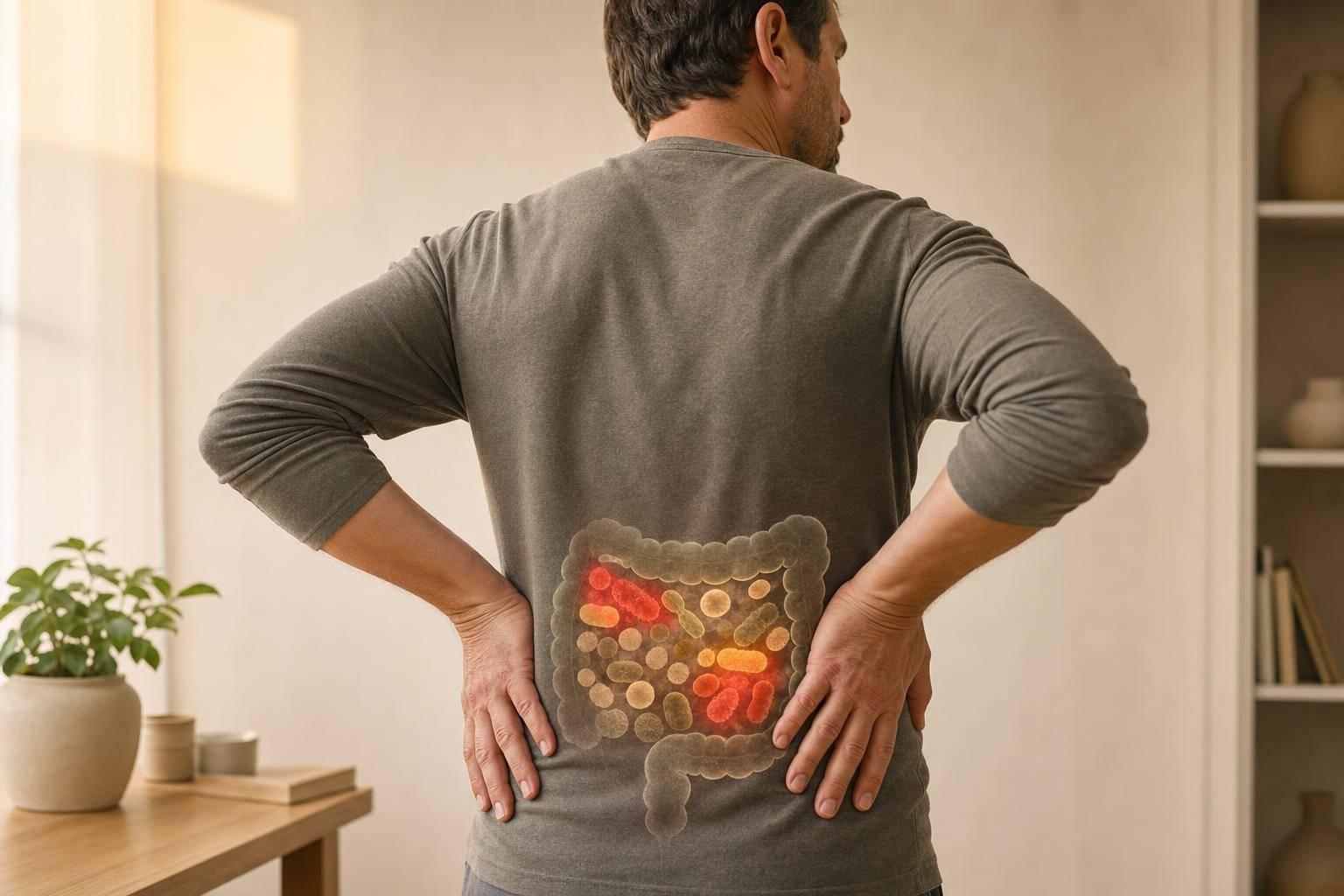
Here’s the main point: I’d read this study as an early signal that chronic low back pain may be linked with changes in the gut microbiome, even when MRI does not show advanced disk damage.
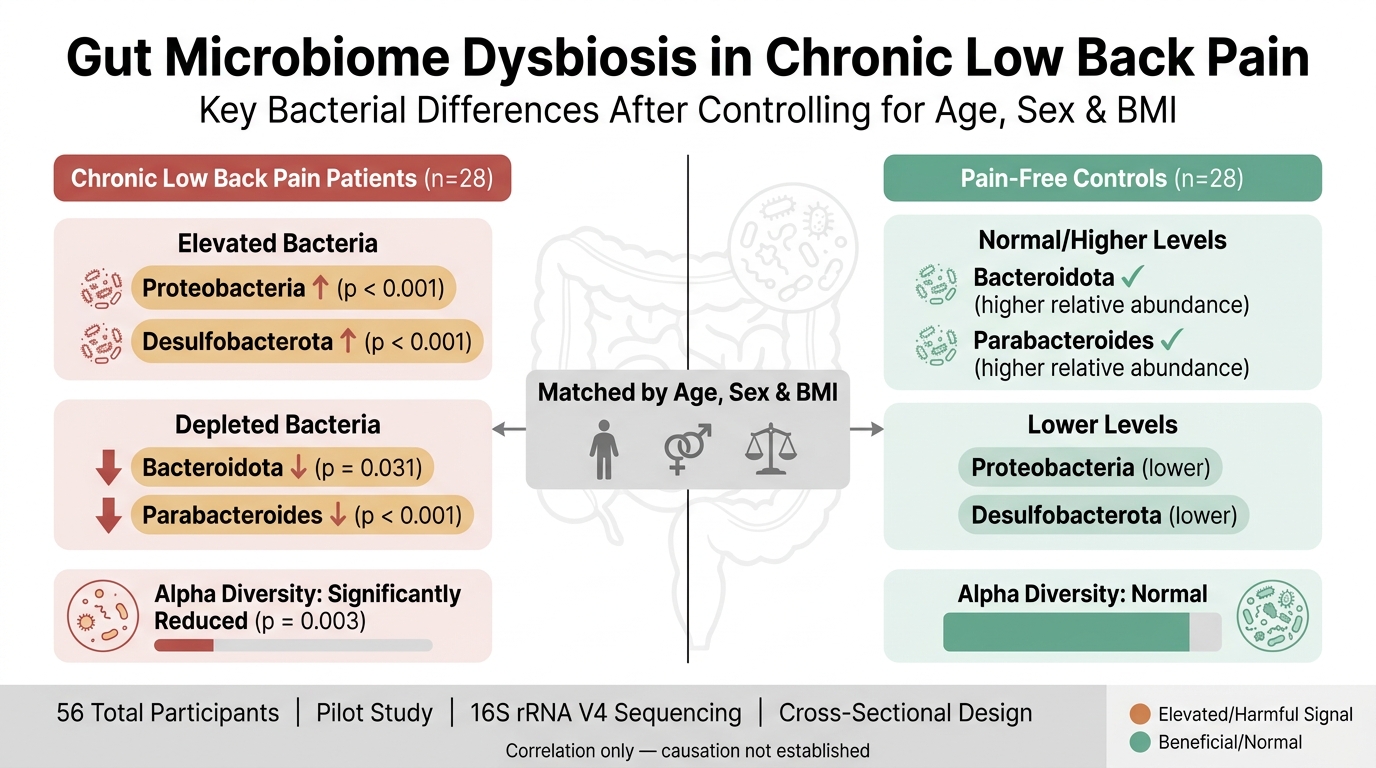
In this pilot study, 28 adults with chronic low back pain were matched with 28 pain-free controls by age, sex, and BMI. The pain group had lower alpha diversity in stool samples (p = 0.003) and a different overall microbe pattern. Some bacteria tied to inflammation were higher, while some commonly seen in healthier gut patterns were lower.
If you want the short version, here it is:
- This does not prove cause and effect
- MRI findings alone may not explain chronic low back pain
- Gut microbiome changes were still seen after matching for age, sex, and BMI
- Diet, stress, sleep, activity, and medication use may still affect the results
- This study does not support microbiome treatment claims for back pain yet
A few numbers stand out:
- 56 total participants
- Chronic pain lasting more than 3 months
- 16S rRNA V4 sequencing used on stool samples
- Proteobacteria and Desulfobacterota were higher
- Bacteroidota and Parabacteroides were lower
What I take from this is simple: low back pain may be more than a spine imaging issue. It may also involve body-wide inflammation, pain sensitivity, and gut-related signals. But because this was a small cross-sectional pilot study, I would treat it as a starting point, not a treatment guide.
Gut Inflammation & Lower Back Pain: The Missing Link
sbb-itb-ed556b0
What Gut Microbiome Dysbiosis Means in This Study
Gut Microbiome Changes in Chronic Low Back Pain vs. Healthy Controls
The gut microbiome is the mix of microbes living in the intestines. In this study, dysbiosis means that this mix appears out of balance, with more microbes linked to inflammation and fewer that are generally seen as helpful.
How Researchers Measured Dysbiosis
To see whether that imbalance appeared in stool samples, the research team analyzed stool using 16S rRNA V4 sequencing. This method profiles bacterial communities based on stool DNA.
They looked at two main measures. Alpha diversity refers to how much variety exists within one sample. Beta diversity compares the overall makeup of microbes between groups. In this study, people with chronic low back pain had significantly reduced alpha diversity compared with healthy controls (p = 0.003). The overall microbiome profiles of the two groups also separated clearly [1].
The Types of Changes Reported in Chronic Pain Research
The chronic pain group also showed shifts in several bacterial taxa:
| Bacterial Taxa | Status in Chronic LBP Patients |
|---|---|
| Proteobacteria | Significantly elevated (p < 0.001) |
| Desulfobacterota | Significantly elevated (p < 0.001) |
| Bacteroidota | Significantly reduced (p = 0.031) |
| Parabacteroides | Depleted (p < 0.001) |
Taken together, these findings point to a changed gut environment. But they do not show that the microbiome caused the pain.
The next step is to ask whether these differences still hold after matching for age, sex, and BMI.
Why Age, Sex, and BMI Matching Makes the Finding More Credible
Microbiome patterns don’t shift because of pain alone. Other factors can change them too. That’s why the study’s matching approach matters. By matching participants on age, sex, and BMI, the researchers made a stronger case that gut dysbiosis showed up in chronic low back pain even without advanced disk degeneration [1].
What Matching Controls For
This part of the study design matters because age, sex, and BMI can all affect the gut microbiome. When those factors are held steady, the differences tied to pain look more convincing.
Age, sex, and BMI all shape gut flora in different ways: age can change microbial diversity over time, sex can affect immune and hormonal patterns, and BMI is tied to inflammation and shifts in the microbiome [2][4].
Even with that matching in place, the study still found reduced alpha diversity (p = 0.003) and meaningful microbial differences between groups. That gives the link more weight [1].
What the Study Still Cannot Rule Out
Matching helps cut down confounding, but it doesn’t remove every other factor. Diet, sleep, stress, and recent medication use can still shape the microbiome [3][4].
That makes the finding more useful when you think about chronic low back pain as a whole-system issue, not only a spine problem.
What This May Mean for Low Back Pain Care
Because dysbiosis stayed present even after matching for age, sex, and BMI, this pilot study suggests chronic low back pain may involve more than spinal structure alone. That matters in day-to-day care. If the microbiome differences still show up after matching, the next practical step is to ask how that should shape the way we assess low back pain.
The Gut-Brain-Spine Connection in Plain Language
The proposed gut-spine link is biologically plausible, but unproven. A disrupted gut microbiome may be linked with a weakened intestinal barrier and microbial byproducts getting into the bloodstream. That, in turn, may add to system-wide inflammation and greater pain sensitivity in the spine [4][5]. The mechanisms make sense on paper, but they haven’t been proven.
So this isn’t a cue to label someone with a microbiome problem. It’s a cue to review lifestyle in a more complete way.
Care-Plan Topics Worth Discussing With Patients
For patients whose pain doesn’t line up with imaging, it makes sense to look past structure alone. Diet quality and fiber intake matter because high-fiber diets support bacteria tied to lower system-wide inflammation [4]. A medication history also deserves a close look, since frequent NSAID or antibiotic use can shift gut microbiota composition and add to dysbiosis [1][5].
Stress and physical activity matter too. Both can affect gut health and inflammatory markers. In practice, these topics fit well into patient-centered care that may include chiropractic adjustments, movement work, and lifestyle support. When nutrition or medical care is needed, refer out.
Structural-Only View vs. Whole-System View of Chronic Low Back Pain
The practical shift here is simple: move from imaging-only thinking to a broader view that includes inflammation, gut-related signaling, and lifestyle factors alongside biomechanics.
"Given the limitations of conventional diagnostic tools and management strategies, microbiome profiling may provide novel biomarkers for LBP and inform microbiome-targeted therapies." – Stone Sima et al. [1]
For now, the value is in a broader assessment, not microbiome-based treatment claims. The goal isn’t to overread the data. It’s to use it as a reason to look at the full picture.
Key Takeaways, Study Limits, and Bottom Line
What Patients Can Take From This Now
The main takeaway is pretty simple: this study points to a broader way to think about chronic low back pain.
In this pilot study, chronic low back pain was linked to gut microbiome dysbiosis, even in patients without advanced disk degeneration. That means the picture may go beyond what shows up on an MRI.
Gut health may be worth talking about with a care team, but it is not a proven treatment for back pain. Diet, medications, and activity should be part of the bigger care history, not treated like a promise of pain relief. In plain terms, this supports a broader wellness review alongside spinal care.
What Clinicians Should Keep in Mind
For clinicians, the big issue is how carefully to use this early signal. This was a small, cross-sectional study with 56 participants, so it cannot show cause and effect. Diet, activity, and medication use were not fully controlled, and the findings apply only to patients without advanced disk degeneration [1].
Future research still needs to test causality and strain-specific effects before microbiome-based treatments, including probiotics, can be recommended for chronic low back pain [1]. So while the study expands the assessment lens, it does not support microbiome-based treatment claims.
FAQs
How important is lower alpha diversity?
In this study, lower alpha diversity means there was less variety of bacterial species in the gut microbiome. That stood out because patients with chronic low back pain consistently had lower diversity than healthy controls.
This points to gut dysbiosis, which means a microbial imbalance. It may be tied to chronic pain through systemic inflammation. But there’s an important line here: it’s a biomarker, not proof that gut changes directly cause back pain.
Could diet or medications explain the microbiome changes?
Possibly. But this pilot study can’t prove that diet or medications were the main reason the microbiome changed.
The researchers matched participants by age, sex, and BMI to cut down on other differences between the groups. Even so, this study points to a link between dysbiosis and chronic low back pain, not a clear cause-and-effect relationship. Bigger studies are still needed to tease apart the role of diet, medications, and other factors.
Should I consider gut testing for chronic low back pain?
Gut testing may be worth discussing, but it’s still an emerging tool. It’s not a standard diagnostic requirement for chronic low back pain.
Research has found a link between gut microbiome dysbiosis and chronic back pain. Some studies point to lower microbial diversity and shifts in certain bacteria that may be tied to inflammation.
That said, these findings come from pilot studies. They don’t yet prove cause and effect, and they don’t support routine testing.
Related Blog Posts
- 5 Common Back Pain Myths Debunked
- Why Is Fatty Infiltration in the Multifidi Muscle Important for a Chronic Low Back Pain Prognosis?
- “The bitter taste of sweet drinks: Increased consumption of soft drinks is linked to depression via gut microbiota alterations” by Sharmili Edwin Thanarajah et al.
- Recent highlights in low back pain research, Part II: Prevention and management

Comments are closed